· Don Schmidt · Guides · 9 min read
CBT-I vs Sleeping Pills and How to Get Off Them Safely
CBT-I vs sleeping pills, compared honestly. See how each works, the risks of long-term pill use, and how CBT-I helps you taper off safely in Alberta.
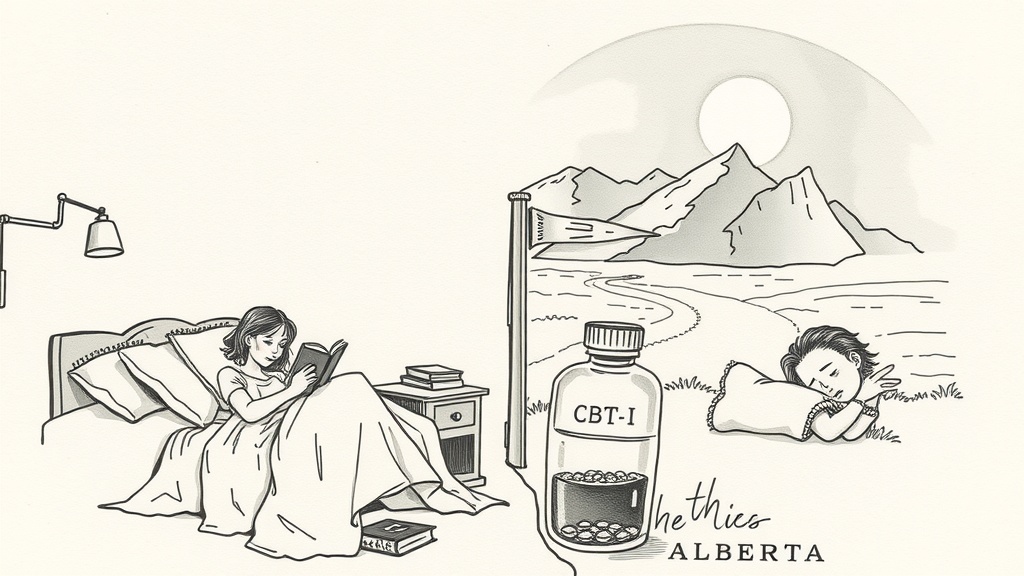
Pills or therapy? You’re not the only one asking
If you’ve been lying awake night after night, you’ve probably reached the same crossroads many Albertans do: do you ask your doctor for a sleeping pill, or do you put the time into a longer-term fix like Cognitive Behavioural Therapy for Insomnia (CBT-I)?
This guide compares the two side by side: how each works, what the trade-offs are, and how to choose. If you’re already taking sleeping pills and want to stop, skip ahead to Getting off sleeping pills for a practical look at how CBT-I makes tapering easier.
First, what counts as insomnia?
Insomnia is more than the odd restless night. It’s ongoing trouble falling asleep, staying asleep, or waking too early and not getting back to sleep, enough that it affects how you feel and function during the day.
- Acute insomnia is short-term, often triggered by stress, illness, travel or a life change.
- Chronic insomnia happens at least three nights a week for three months or more.
The difference matters, because the right treatment for a rough couple of weeks isn’t necessarily the right treatment for a problem that’s dragged on for years.
Option 1: Sleeping pills
Sleeping pills are tempting for an obvious reason: they can work tonight. The main types you’ll hear about in Canada include:
- Benzodiazepines, such as lorazepam (Ativan) or temazepam (Restoril)
- “Z-drugs”, such as zopiclone (Imovane) or zolpidem (Sublinox)
- Other prescriptions used off-label for sleep, such as some sedating antidepressants
- Over-the-counter sleep aids, which usually contain sedating antihistamines
How they work and why they appeal
Many prescription sleep medications act on GABA, a brain chemical that dampens nervous system activity. That can help you fall asleep faster. For short-term insomnia, such as a few bad nights after a stressful event, a doctor may prescribe a pill for a brief period to break the cycle.
The downsides
The trouble usually starts when “a few nights” turns into months or years. Common concerns with ongoing use include:
- Tolerance and dependence. Your body can adapt, so the same dose does less, and sleeping without the pill starts to feel impossible.
- Side effects. Next-day grogginess, dizziness, memory problems and slower reaction time are common, and they raise the risk of falls, especially for older adults. Some people experience complex sleep behaviours like sleepwalking or sleep-eating.
- Rebound insomnia. Stopping suddenly can make sleep temporarily worse than it was before, which convinces many people they “can’t sleep without it.”
- It doesn’t fix the cause. Pills address the symptom, not the habits, worries and conditioned arousal that keep insomnia going. When you stop, the original problem is usually still there.
- Interactions. Combining sleep medication with alcohol, opioids or other sedating drugs can be dangerous.
In Alberta, prescription sleep medication comes through your physician or nurse practitioner, who will weigh these risks and usually recommend short-term use only.
Option 2: CBT-I
CBT-I is the recommended first-line treatment for chronic insomnia. Instead of changing brain chemistry for one night, it changes the thoughts and behaviours that keep you awake, so your natural sleep system can do its job again. It’s usually delivered over about four to eight sessions.
What CBT-I includes
- Stimulus control. Re-training your brain to link bed with sleep instead of frustration: go to bed only when sleepy, use the bed only for sleep and intimacy, get up if you’re lying awake, and keep the same wake-up time every day.
- Sleep restriction. Temporarily matching your time in bed to the sleep you’re actually getting. It builds sleep drive and consolidates broken sleep, and your window expands as sleep improves. (More in our sleep restriction therapy guide.)
- Cognitive restructuring. Challenging beliefs like “I’ll never sleep without a pill” or “If I don’t get eight hours, tomorrow is ruined,” which feed bedtime anxiety.
- Relaxation training. Techniques like slow breathing, progressive muscle relaxation and mindfulness to lower physical and mental arousal.
- Sleep hygiene. Supporting habits such as a cool, dark bedroom and sensible caffeine and alcohol timing. Helpful, but not a cure on its own.
For a closer look at how each piece fits together, see our full guide to what CBT-I is and how it works.
Benefits
- Lasting results. You learn skills you keep, so improvements tend to hold after treatment ends.
- No medication side effects.
- Treats the root causes rather than masking symptoms.
- Better days, too. Improved sleep usually means better mood, focus and energy.
Challenges
- It takes effort. You have to actually follow the plan, especially in the first few weeks.
- It’s not instant. Sleep can feel a bit worse during early sleep restriction before it gets better.
- Access. Finding a trained CBT-I provider can take more legwork than getting a prescription, though virtual sessions have made it much easier across Alberta.
CBT-I vs sleeping pills at a glance
| Feature | Sleeping pills | CBT-I |
|---|---|---|
| How it works | Changes brain chemistry to induce sleep | Changes the thoughts and habits that drive insomnia |
| Speed | Fast, often the same night | Gradual, usually over several weeks |
| Long-term results | Benefits often fade; insomnia returns when stopped | Improvements typically last after treatment ends |
| Side effects | Grogginess, memory issues, falls, rebound insomnia | No medication side effects; some short-term tiredness |
| Root cause | Masks symptoms | Addresses underlying causes |
| Dependence risk | Yes, with regular use | None |
How to choose
The right answer depends on your situation:
- How long you’ve had insomnia. For a short, situational patch, a brief course of medication may be reasonable. For chronic insomnia, CBT-I is the recommended first step.
- Your health and other medications. Other conditions, prescriptions and mental health concerns like anxiety or depression all factor in.
- What you’re ready for. CBT-I asks for consistency for a few weeks. In exchange, you get a skill set rather than a refill.
- Your lifestyle. If you work rotating shifts, CBT-I for shift workers in Alberta’s oil and gas industry adapts the approach to irregular hours. If you’re older, CBT-I for seniors covers age-related sleep changes and medication concerns.
Your family doctor is a good place to start. They can rule out other medical causes (like sleep apnea), review your medications and talk through options with you.

Getting off sleeping pills with CBT-I
If you’ve been taking sleeping pills for a while, the idea of stopping can be scary. Many people have tried once, had a few terrible nights of rebound insomnia, and gone straight back to the pill. CBT-I changes that equation: you build your natural ability to sleep first, so you have something to rely on as the dose comes down.
Important: Never stop a sleep medication abruptly, especially a benzodiazepine or a Z-drug you’ve taken regularly. Stopping suddenly can cause withdrawal symptoms and severe rebound insomnia. Always taper under the supervision of your doctor or pharmacist, who can set a schedule that’s right for your specific medication and dose.
What the process usually looks like
- Assessment. Your provider reviews your sleep history, what you take and how often, and what else may be feeding your insomnia.
- Build the foundation first. You start CBT-I strategies like a fixed wake-up time, stimulus control and a sleep diary, often before the dose changes at all.
- Gradual reduction. With your prescriber, you lower the dose slowly in steps while continuing CBT-I. A slow taper helps minimize withdrawal and rebound effects.
- Handle the bumps. CBT-I gives you a plan for the anxious nights and rough patches that can come with tapering, so a bad night is a setback, not a reason to quit.
Why CBT-I makes tapering easier
- You’re not left with nothing. When the pill dose drops, you already have stimulus control, sleep restriction and relaxation skills working for you.
- It targets the fear. Much of the struggle is the belief that you can’t sleep without medication. Cognitive work directly challenges that belief, and every successful night on a lower dose is evidence against it.
- Sleep drive does the heavy lifting. Sleep restriction builds natural sleep pressure, which helps offset the temporary disruption a taper can cause.
Tips for a smoother taper
- Keep your wake-up time fixed, even after a poor night. That protects tomorrow night’s sleep.
- Don’t add sleep elsewhere. Long naps and sleeping in undermine the sleep drive you’re building.
- Expect some rough nights. They’re normal and temporary. Don’t respond by taking extra medication without talking to your prescriber.
- Watch alcohol and cannabis. Swapping one sleep crutch for another can keep insomnia going.
- Get support. A trained CBT-I provider can adjust your plan as you go, which is especially valuable when you’re coming off medication. Self-help books and apps can help, but personal guidance is usually worth it here.
If anxiety is a big part of your sleep struggles, our guide to CBT-I for anxiety-induced insomnia goes deeper on quieting a racing mind at night.
Finding CBT-I in Alberta
- Alberta Health Services sleep programs may include CBT-I components, though wait times vary.
- Private psychologists and therapists in Calgary, Edmonton and communities across Alberta offer CBT-I, often virtually.
- Online CBT-I programs can be a useful option, especially for milder insomnia. See our review of online CBT-I.
Want help finding the right fit? Get in touch and we’ll point you toward CBT-I support in your area.
Frequently asked questions
Is CBT-I covered by Alberta Health Care?
Sessions with a private psychologist generally aren’t covered by the Alberta Health Care Insurance Plan, but many employer and private extended health plans cover psychological services. Some AHS programs may include CBT-I components. Check with your benefits provider, and see our guide to public vs private CBT-I options in Alberta.
How long does CBT-I take to work?
Many people notice real improvement within four to eight sessions, usually over six to ten weeks. Progress varies, and sticking with the techniques consistently is what makes the results last.
Can I keep taking sleeping pills while doing CBT-I?
Yes. Many people start CBT-I while still on medication, then taper gradually with their doctor once their new sleep skills are in place. Any change to your dose should be made with your prescriber.
What if I have a really bad night while tapering?
It’s normal and it doesn’t mean the plan is failing. Keep your usual wake-up time, skip the nap, and stick with your CBT-I strategies. If rough nights become frequent, talk to your prescriber about slowing the taper rather than stopping CBT-I.
Is CBT-I right for everyone?
It suits most adults with chronic insomnia, including people who want to reduce or stop sleeping pills. Some conditions, such as untreated bipolar disorder, seizure disorders or untreated sleep apnea, may need extra care or adjustments, particularly with sleep restriction. Talk to a healthcare professional about your situation.
The bottom line
Sleeping pills can help in the short term, but they rarely solve chronic insomnia and can be hard to stop. CBT-I takes a little more effort up front, and in return you get skills that keep working long after treatment ends, including a safer, steadier path off sleep medication. If you’re ready to start, learn more about what CBT-I is or contact us to find support in Alberta.
Assess Your Sleep Quality Today
Take our My Sleep Health Score assessment to get personalized insights about your sleep patterns and discover how CBT-I can help you achieve better sleep.

Don Schmidt
15+ years of experience in sleep therapy and Cognitive Behavioral Therapy for Insomnia (CBT-I). Passionate about connecting individuals struggling with sleep disorders to evidence-based, non-medical treatment solutions. Author of hundreds of articles and comprehensive guides on sleep health, CBT-I techniques, and overcoming insomnia. When not helping clients achieve better sleep, you can find me hiking with my family and dogs or enjoying a good book.
Ready to connect with a provider?
Allow us to connect you with a provider who can help.