· Don Schmidt · Sleep Disorders · 7 min read
Why You Have Difficulty Falling Asleep and What Actually Helps
Exhausted but still lying awake? Learn what's really behind your difficulty falling asleep, and the evidence-based CBT-I steps that actually help you drift off.
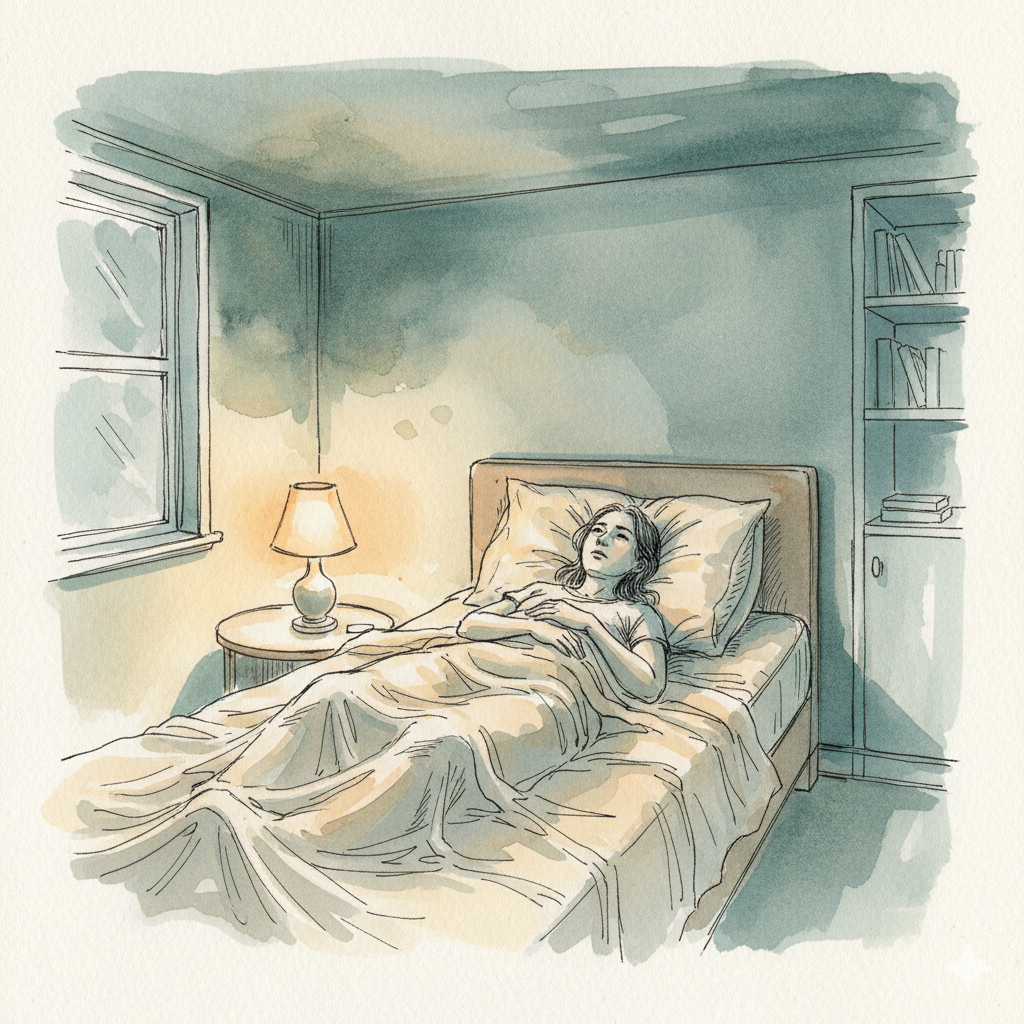
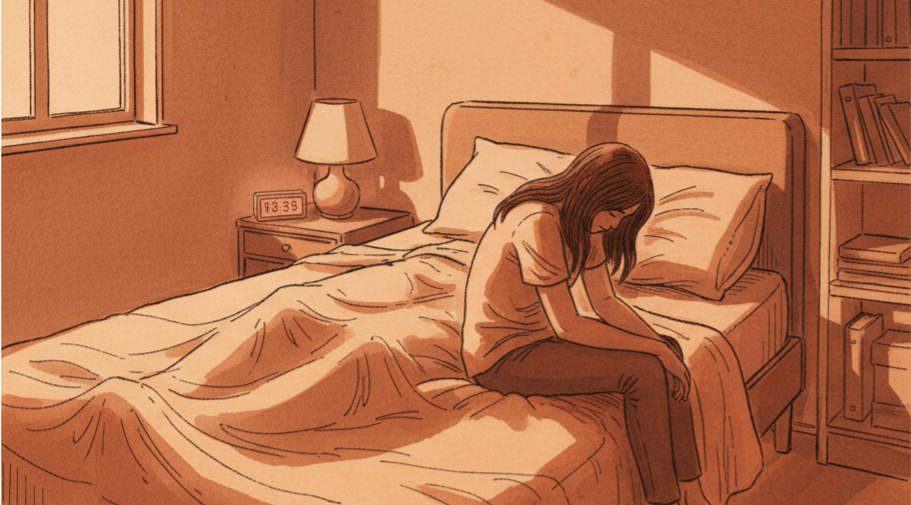
You’re tired. You’ve been tired all day. You finally crawl into bed, close your eyes — and nothing. Your mind starts going. You replay the day, rehearse tomorrow, notice every sound in the house. An hour passes. Then another. Sound familiar?
Difficulty falling asleep is one of the most common sleep complaints out there, and one of the most misunderstood. Most people assume it’s just stress, or that they’re not tired enough, or that they just need the right pillow. But the reality is more interesting — and more fixable — than that.
Why Falling Asleep Is Harder Than It Should Be
Sleep isn’t something your brain does to you. It’s something your brain allows when it feels safe and settled enough. That distinction matters more than most people realize.
Your nervous system is constantly scanning for threats. For most of human history, that was a feature — you wanted to stay alert near predators. But your brain doesn’t distinguish between a lion in the grass and a difficult conversation you have to have at work tomorrow. Stress is stress. Arousal is arousal. And an activated nervous system at 11 p.m. is going to resist sleep no matter how exhausted you feel.
This is why you can be bone-tired and still lie awake. Fatigue and sleepiness aren’t the same thing. Fatigue is physical depletion. Sleepiness is a neurological state your brain has to actually enter. When your system is on high alert, it tends to resist that transition.
The Most Common Reasons You’re Lying Awake
There’s no single cause of difficulty falling asleep — it’s usually a combination of factors that feed on each other.
Anxiety and a busy mind are the biggest culprits for most people. Worry, rumination, and mental planning all keep the brain in a wired state. The quieter and darker your room gets, the louder your thoughts can seem. This is partly because you’ve removed most of the distractions that were keeping your mind occupied during the day.
Irregular sleep timing is another major factor that often gets overlooked. Your body’s internal clock — the circadian rhythm — works best when you’re sleeping and waking at roughly consistent times. If your schedule varies wildly day to day, your brain doesn’t know when it’s supposed to prepare for sleep, and the signals get muddled.
Evening screen use genuinely does make things harder. The blue light from phones and tablets suppresses melatonin, the hormone that signals to your brain that it’s nighttime. But beyond the light, the content itself matters — scrolling social media or watching stimulating TV keeps your nervous system engaged when it should be winding down.
Caffeine has a longer half-life than most people expect. Even an early-afternoon coffee can still have half its caffeine in your system at bedtime. If you’re sensitive to it, that’s enough to make falling asleep noticeably harder.
Spending too long in bed is a counterintuitive one. (It’s also a common reason people end up waking up at 3am and staring at the ceiling.) If you go to bed early to try to get more sleep, lie there awake for hours, and then sleep in to compensate, you’re actually weakening your sleep drive. Your brain needs to build up enough sleep pressure over the course of the day to fall asleep quickly at night. Too much time in bed dilutes that pressure.
What Happens in Your Body When You Can’t Sleep
Understanding the physiology can take some of the fear out of lying awake. When you’re struggling to fall asleep, your cortisol levels tend to be elevated — that’s your primary stress hormone, and it’s doing exactly what it’s designed to do. It’s keeping you alert and ready to respond.
At the same time, your core body temperature needs to drop slightly for sleep to happen. Stress and tension can interfere with this cooling process. So the frustration of not sleeping actually makes sleeping harder — the anxiety about being awake becomes its own source of arousal.
This is the sleep anxiety loop that a lot of people fall into. You have one bad night, start worrying about sleep, and the worry itself becomes the reason you can’t sleep. Over time, the bedroom itself can become a conditioned cue for wakefulness rather than rest. Your brain starts associating the bed with the stress of lying awake rather than with sleep.
Sleep Hygiene — What Works and What’s Overstated
You’ve probably heard the standard advice: no screens before bed, cool dark room, consistent bedtime. That advice isn’t wrong, but it’s often overhyped as a solution for people who are genuinely struggling.
Sleep hygiene helps most when your sleep is slightly off-track due to lifestyle factors. It’s useful for mild or situational sleep difficulty. But if you’ve had difficulty falling asleep for weeks or months, optimizing your bedroom lighting is unlikely to solve it. The problem has moved deeper — into your nervous system’s relationship with sleep itself.
That said, a few habits really do move the needle. Keeping your wake time consistent (yes, even on weekends) is probably the single most effective behavioural change you can make. Getting natural light in the morning helps anchor your circadian rhythm. And avoiding lying in bed awake for long stretches — getting up and doing something low-key if you can’t sleep after 20-ish minutes — helps break the conditioning that makes your bed feel like a stressful place.
When Difficulty Falling Asleep Becomes Chronic Insomnia
If you’ve been struggling to fall asleep three or more nights a week for at least a month, and it’s affecting how you function during the day, that’s the clinical definition of insomnia. It’s not just “bad sleep.” It’s a recognized condition with a well-established treatment.
A lot of people in this situation reach for sleeping pills or melatonin, which can help short-term but don’t address why sleep is difficult in the first place. If you want to understand how the evidence stacks up, the post on CBT-I vs. sleeping pills breaks it down clearly.
If you’ve got trouble sleeping every night, not just trouble dropping off, or you’re dragging through the mornings with trouble waking up, those patterns are often connected and respond to the same approach.
If anxiety is a major part of what’s keeping you awake, there’s also good material on how anxiety-driven insomnia works and how to address it.
The Treatment That Actually Fixes Chronic Difficulty Falling Asleep
Cognitive Behavioural Therapy for Insomnia — CBT-I — is the gold standard treatment for ongoing sleep difficulty. It’s recommended as the first-line approach by sleep medicine organizations internationally, ahead of medication.
CBT-I works by targeting the thoughts and behaviours that perpetuate insomnia, rather than just masking the symptoms. It includes techniques like sleep restriction therapy (which sounds brutal but is surprisingly effective), stimulus control to rebuild your brain’s association between bed and sleep, and cognitive work to challenge the unhelpful beliefs that fuel sleep anxiety. The results tend to be durable — people who complete a course of CBT-I usually maintain their improvements long after treatment ends.
If you’re curious about how the process actually works, this overview of CBT-I is a good place to start. It explains the components, what to expect, and why the approach is so effective for exactly the kind of sleep difficulty described in this post.
If you’ve been dealing with difficulty falling asleep for a while and you’re ready to do something about it, reaching out for a consultation is a straightforward next step. CBT-I is available online, which means you can access it from anywhere in Alberta without having to travel or wait for an in-person appointment.
You don’t have to keep lying awake every night hoping tomorrow will be different. The research on this is solid — and so is the help that’s available.
Assess Your Sleep Quality Today
Take our My Sleep Health Score assessment to get personalized insights about your sleep patterns and discover how CBT-I can help you achieve better sleep.

Don Schmidt
15+ years of experience in sleep therapy and Cognitive Behavioral Therapy for Insomnia (CBT-I). Passionate about connecting individuals struggling with sleep disorders to evidence-based, non-medical treatment solutions. Author of hundreds of articles and comprehensive guides on sleep health, CBT-I techniques, and overcoming insomnia. When not helping clients achieve better sleep, you can find me hiking with my family and dogs or enjoying a good book.
Ready to connect with a provider?
Allow us to connect you with a provider who can help.